
How To Take GLP-1 Injections and Not Feel Awful
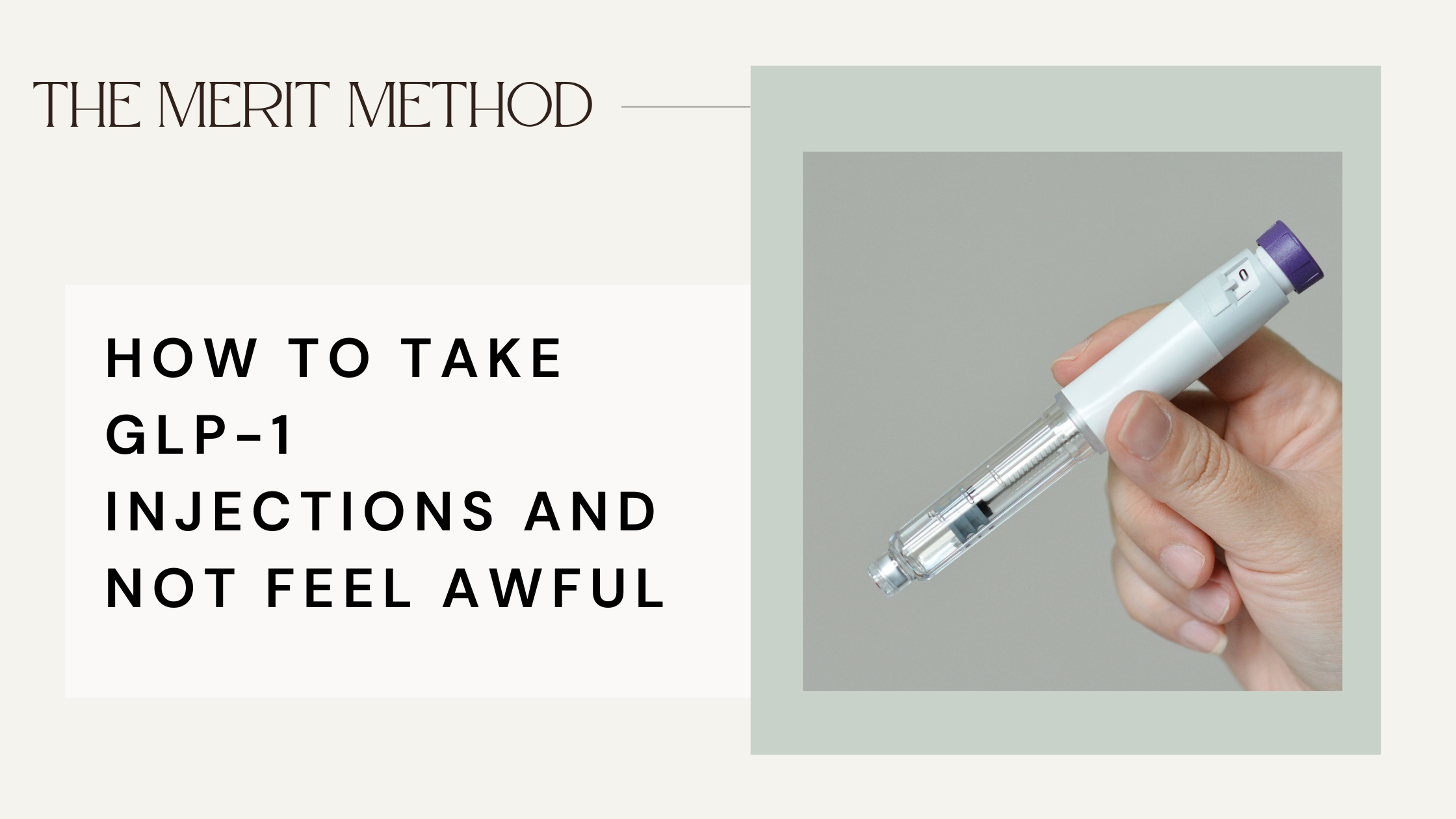
Quick answer: Most GLP-1 side effects happen because people accidentally under-eat, under-hydrate, increase doses too quickly, or eat foods that are hard to digest. Prioritizing protein, water, and steady eating habits can prevent most of the misery people associate with these medications.
In this article:
Why GLP-1s Cause Side Effects in the First Place
The Merit 80-20-80 Rule
What to Eat (and Avoid) on a GLP-1
When to Talk to Your Provider
Frequently Asked Questions
Talk to a Nurse — Free Consultation
Why GLP-1s Cause Side Effects in the First Place
If you've heard horror stories about weight loss injections, here's something worth knowing: most side effects aren't really about the medication itself. They happen because people accidentally under-eat, under-hydrate, or increase their dose too quickly.
GLP-1 medications slow down how quickly food leaves your stomach. That's part of how they help you feel full longer — but it also means food sits in your stomach longer than you're used to. Many people start feeling fuller faster and accidentally stop eating enough, which can lead to fatigue, headaches, nausea, and feeling generally awful — not because the medication failed, but because the body isn't getting what it needs.
The goal isn't to eat as little as possible. The goal is to nourish your body while the medication helps manage your hunger.
The Merit 80-20-80 Rule
We give every patient on a GLP-1 medication the same simple framework to follow:
80 grams of protein per day
20 grams of fiber per day
80 ounces of water per day
This single rule prevents the majority of side effects we see. Protein and fiber keep you nourished and satisfied even with a smaller appetite, and adequate water prevents the constipation, headaches, and fatigue that often get blamed on the medication itself. (For more on why protein matters so much here, see [LINK to Post #2: Why Does Protein Help With Weight Loss?])
What to Eat (and Avoid) on a GLP-1
A few practical guidelines:
Prioritize protein at every meal, even if your appetite is smaller — make every bite count
Drink water consistently throughout the day, not all at once
Don't skip meals, even when you're not very hungry — your body still needs fuel
Increase your dose only as directed by your provider, never faster
Listen to your hunger cues, but don't mistake "not very hungry" for "don't need to eat"
Foods that tend to be harder to tolerate on a GLP-1 include greasy or fried foods, large portions of refined carbohydrates, and alcohol — all of which can sit in the stomach longer and contribute to nausea or discomfort.
When to Talk to Your Provider
Most side effects can be minimized with proper dosing, hydration, protein intake, and close communication with your provider. If you're experiencing persistent nausea, vomiting, severe abdominal pain, or symptoms that don't improve with these adjustments, reach out to your provider promptly rather than waiting it out.
A Realistic First Two Weeks
The first two weeks after starting a GLP-1, or after any dose increase, tend to be when patients notice the most change. Appetite often drops faster than expected, which is exactly when the temptation to under-eat is strongest — your body simply isn't sending the hunger signals you're used to relying on.
This is the window where the 80-20-80 rule matters most. Setting reminders to drink water throughout the day, prepping easy protein options in advance, and eating on a rough schedule rather than waiting for hunger cues can make a meaningful difference in how this adjustment period feels. Most patients tell us that once they get through the first couple of weeks on a new dose, things settle into a much more manageable rhythm.
Frequently Asked Questions
Why do I feel worse a few days after increasing my dose? This is common as your body adjusts. Sticking closely to the 80-20-80 rule during dose increases can significantly reduce how rough this adjustment period feels.
Is nausea always a sign something is wrong? Not necessarily — mild nausea is common, especially early on or after a dose increase. Severe or persistent nausea should be discussed with your provider.
Can I drink alcohol while on a GLP-1? Alcohol can be harder to tolerate and may worsen nausea or other digestive side effects. Many people choose to limit or avoid it, especially during dose adjustments.
How long do side effects typically last? This varies by person and by medication, but side effects are often most noticeable during the first few weeks and after each dose increase, then tend to ease as your body adjusts.
Does which GLP-1 I'm on affect how I feel? Yes — different GLP-1 medications tend to have different common side effects. [LINK to Post: Which GLP-1 Has the Least Side Effects?]
Should I eat before or after my injection? There's no strict rule, but many patients find it easiest to take their injection at a consistent time and plan a protein-forward meal within a few hours, rather than injecting on a completely empty or very full stomach.
Is it normal to lose interest in foods I used to enjoy? Yes, this is common. As appetite and food noise decrease, preferences can shift too — some foods that felt appealing before may seem less interesting now. This is generally not a cause for concern unless it leads to skipping meals altogether.
Have Questions? Let’s Talk.
Your free introductory phone call is a chance to speak with a member of our team, learn more about the Merit Method, and get answers to your questions.
We’ll talk about what you’ve been struggling with, what you’re hoping to achieve, and whether Merit may be the right fit for you.
There’s no pressure and no commitment—just a helpful conversation so you can feel confident about your next step.