
Why Does Fiber Help With Weight Loss?
Quick answer: Fiber helps you stay full longer, slows digestion to prevent blood sugar spikes, and supports a healthy gut — all of which make weight loss easier. Most women focus only on calories and protein, and overlook fiber entirely.
In this article:
What Fiber Actually Does for Weight Loss
Signs You're Not Getting Enough Fiber
How Much Fiber Do You Need?
Best Fiber-Rich Foods
Frequently Asked Questions
Talk to a Nurse — Free Consultation
What Fiber Actually Does for Weight Loss
Most people think fiber is only important for digestion. It does much more than that.
It helps you stay fuller, longer. Fiber adds bulk and takes longer to break down, which means it keeps you satisfied between meals — similar to how protein works, but through a different mechanism. (If you haven't read it yet, protein and fiber work as a team.
It slows digestion and steadies blood sugar. When digestion slows down, your blood sugar rises more gradually after meals instead of spiking and then crashing. Those crashes are often what drive afternoon cravings and energy dips.
It supports a healthy gut. A healthy gut plays a role in overall health, digestion, and — increasingly, research shows — how your body manages weight and inflammation.
Signs You're Not Getting Enough Fiber
One of the biggest mistakes we see is women focusing only on calories while completely ignoring fiber. If you relate to any of these, fiber might be a missing piece:
You're hungry again shortly after eating, even when you ate enough calories
You experience energy crashes a few hours after meals
You deal with irregular digestion
Your meals are mostly protein and very little produce, beans, or whole grains
If you're hungry all day no matter what you eat, it's worth looking at fiber alongside protein.
Fiber and Your Gut Health
There's a reason fiber keeps coming up in conversations about overall health, not just weight loss. Fiber feeds the beneficial bacteria in your gut, and a healthy gut plays a role in digestion, inflammation, and even how your body manages blood sugar and weight over time.
This connection matters even more if you're losing weight through any method — diet changes, medication, or both. As your eating patterns shift, your gut needs consistent support to keep functioning well. Many women notice digestive changes when they reduce portion sizes or start a GLP-1 medication, and fiber is one of the simplest tools to help ease that transition. Pairing fiber with plenty of water is especially important here, since fiber without enough fluid can actually make digestive issues worse instead of better.
How Much Fiber Do You Need?
At Merit, our goal for most women is 20 grams of fiber per day. Many women fall well short of this without realizing it, especially if meals are centered around protein and meat with few vegetables, fruits, or whole grains.
A simple way to increase fiber without overhauling your diet: add one fiber source to a meal you already eat regularly, rather than trying to change everything at once. Increase gradually — a sudden jump in fiber can cause bloating or discomfort, especially if you're also adjusting to a GLP-1 medication.
Best Fiber-Rich Foods
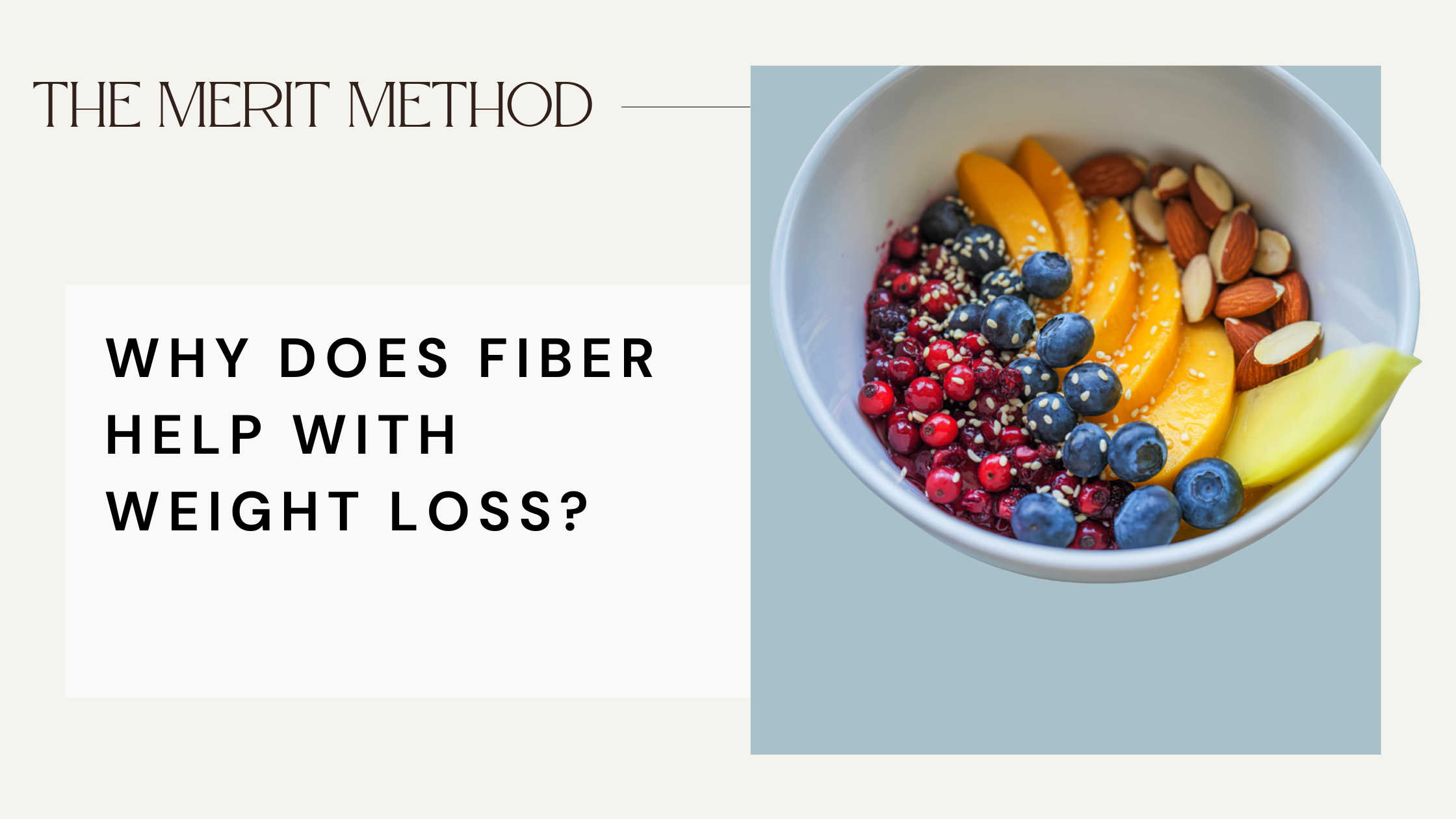
Berries (raspberries and blackberries are especially high in fiber)
Leafy greens and cruciferous vegetables (broccoli, brussels sprouts)
Beans and lentils
Chia seeds and ground flaxseed
Whole grains like oats and quinoa
A fiber supplement, if you're consistently falling short through food alone
Frequently Asked Questions
Can fiber cause bloating? Yes, especially if you increase your intake quickly. Add fiber gradually and drink plenty of water alongside it.
Should I take a fiber supplement? Food sources are ideal, but a supplement can help close the gap if you're consistently falling short. Talk with your provider about which type fits your needs.
Does fiber matter more if I'm on a GLP-1 medication? Yes. Since food volume is naturally lower, fiber-rich foods help you get more nutritional value out of smaller meals and can ease some digestive side effects.
What's the difference between soluble and insoluble fiber? Soluble fiber (found in oats, beans, and fruit) dissolves in water and helps slow digestion. Insoluble fiber (found in vegetables and whole grains) adds bulk and supports regularity. Most whole foods contain a mix of both.
Can fiber help with constipation from weight loss medications? Often, yes — alongside adequate water intake. This is especially relevant for tirzepatide, which tends to cause more constipation than other GLP-1 medications.
Do I need fiber if I'm already eating a lot of vegetables? Possibly less, but it's still worth tracking for a few days. Many women assume they're getting enough fiber from vegetables alone but fall short of 20 grams without realizing it, especially if portions are small or meals lean heavily toward protein.
How quickly will I notice a difference after adding more fiber? Some women notice feeling fuller within a few days, while gut-related benefits like more regular digestion often take one to two weeks of consistent intake to fully show up.
Have Questions? Let’s Talk.
Your free introductory phone call is a chance to speak with a member of our team, learn more about the Merit Method, and get answers to your questions.
We’ll talk about what you’ve been struggling with, what you’re hoping to achieve, and whether Merit may be the right fit for you.
There’s no pressure and no commitment—just a helpful conversation so you can feel confident about your next step.